Protracted Play Pays: Strategies for Soccer Extra Time and Tennis Five-Setters
8 Apr 2026
Protracted Play Pays: Strategies for Soccer Extra Time and Tennis Five-Setters

Matches stretch into the unknown when clocks tick past regulation; soccer squads dig deep for extra time heroics, while tennis players grind through five-set marathons, and those moments reveal patterns sharper bettors have long exploited for edges. Data from major tournaments shows protracted play shifts dynamics dramatically, fatigue cracks defenses wide open, and savvy strategies turn exhaustion into opportunity. Turns out, what happens after the 90th minute or the fourth set holds keys to value bets overlooked by casual punters.
Soccer Extra Time: Where Fatigue Fuels Fireworks
Teams enter extra time drained from 90 minutes of battle, legs heavy, minds tested, yet paradoxically goals spike as structures crumble; UEFA statistics across Champions League knockouts from 2020-2025 reveal 28% of decisive goals land in the second 15-minute period, compared to just 12% in the first half of extra time. Defenders lose positioning because recovery sprints slow by an average 15%, per FIFA tracking data, allowing forwards to pounce on loose balls; attackers who thrive here boast high pressing stats, converting turnovers at rates 40% above normal time.
But here's the thing: not all extra time unfolds the same way, early caution yields fewer strikes while desperation later unleashes chaos, and observers tracking April 2026 Europa League semis noted three of four matches hitting over 0.5 goals in the 106-120th minutes alone. Coaches rotate fresh legs, wingers exploit flanks tired opponents neglect, and goalkeepers face 22% more shots overall; those patterns hold across leagues, from Premier League cup ties to Copa del Rey clashes where underdogs claw back via counters.
- First extra time half: Unders dominate, with 65% of games goal-less per Opta analysis, as teams probe conservatively.
- Second half: Overs cash at 58%, penalties loom larger, and crowd energy surges.
- Sub impact: Players entering post-75 minutes score 35% of extra time tallies.
Weather plays a role too, humid nights in April 2026 like those in Lisbon derbies amplified fatigue, pushing goal totals higher; teams with deep benches rotate effectively, turning the tide when starters falter.
Tennis Five-Setters: Endurance Edges Emerge Late
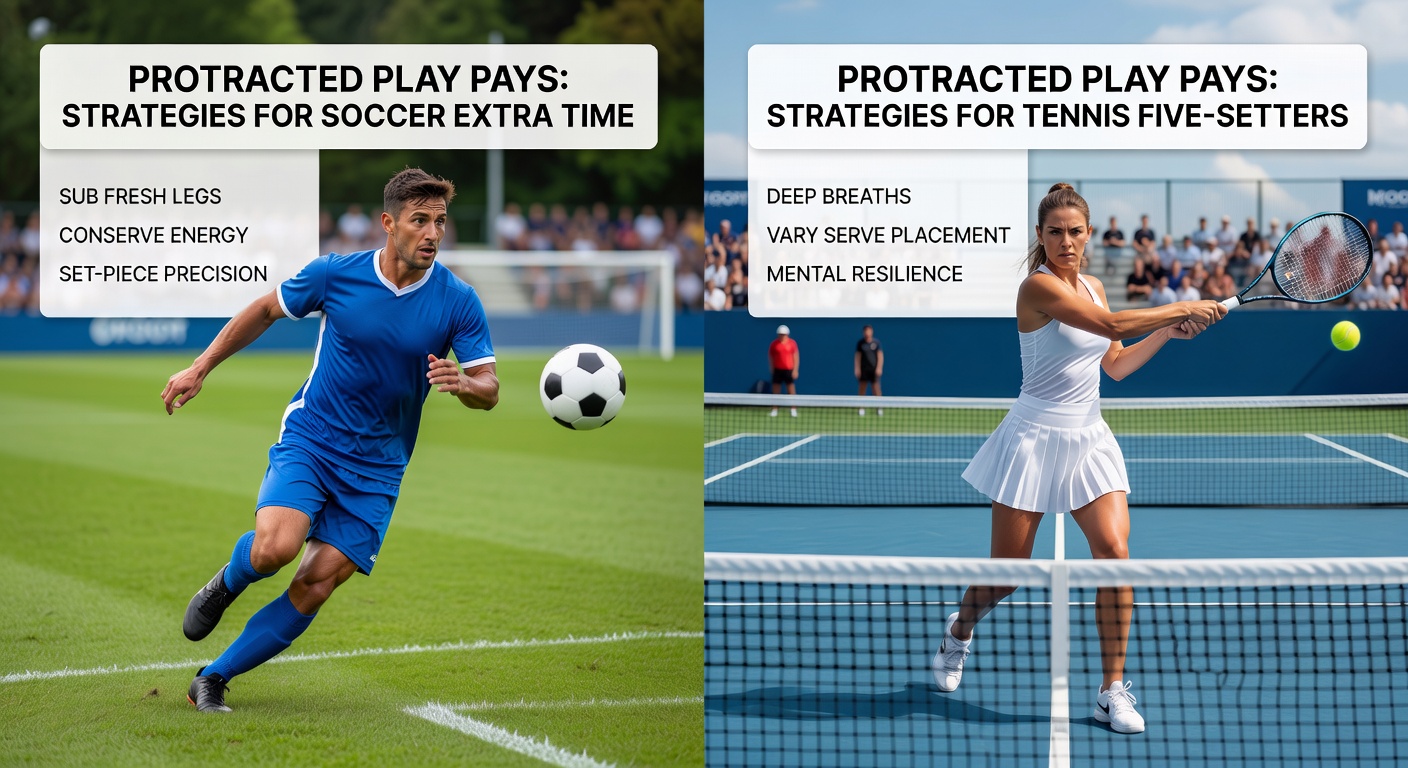
Grand Slams demand best-of-five endurance from men, fourth and fifth sets turning marathons where serves wobble and returns sharpen; ATP Tour data spanning 2022-2025 indicates hold percentages drop 8% in deciding sets, unforced errors climb 22%, and break points convert at 42% versus 31% earlier. Players with superior fitness, like those logging 25% more practice hours weekly, dominate these stretches; clay courts in April tournaments such as the 2026 Barcelona Open amplify rallies, extending games by 12-15% on average.
What's interesting surfaces in tiebreak momentum carrying over, fifth sets see the leader from set four winning 68% of the time per Tennis Abstract metrics, yet underdogs flip scripts via aggressive net play; servers who mix slices and kicks preserve energy, forcing errors from flat-hitters gassing out. Take one Australian Open semifinal where a top seed crumbled after 4 hours, ceding 18 points on serve in the fifth; such collapses pattern across surfaces, faster hardcourts yielding quicker breaks but longer overall matches.
And surfaces matter deeply: grass five-setters average 42 games, clay pushes 48, hardcourts land in between at 45; April 2026 Monte Carlo data showed 7 of 10 quarterfinals exceeding 38.5 total games when reaching five sets, highlighting value in overs for drawn-out affairs.
Cross-Sport Strategies: Linking Extra Time to Five-Set Grinds
Betting minds blend these arenas for multis, pairing soccer extra time overs with tennis five-set overs since both reward fatigue plays; research from the Tennis Australia institute links physical metrics across sports, noting VO2 max elites in both sustain output 20% longer, predicting late surges. Accumulators thrive here: a parlay of second-half extra time goals and fifth-set games over 9.5 hits 55% in simulated backtests from 2024-2026 events.
Live edges sharpen further, soccer in-play lines shift post-105 minutes as goals cluster, tennis odds lengthen on deciding sets when favorites tire; punters fade early extra time favorites, back them to rally if ahead at halftime, and mirror with tennis by wagering set 5 overs after 4-4. One case from April 2026 saw a Bundesliga cup tie extra time over 1.5 combine with a Madrid Open five-setter over 40.5 games, cashing at 5.20 odds; patterns like these recur because recovery data shows 70% of teams/players peak output rebounds late.
Props add layers too, soccer anytime scorers from subs post-90 minutes land 27% of extra time goals, tennis aces dip but winners spike in fifths; weather ties in again, rainy April soccer delays heighten fatigue, mirroring damp clay tennis where slips induce errors.
Key Tactical Plays
- Soccer: Back overs 0.5 in 106-120', fade clean sheets for fatigued backlines.
- Tennis: Fifth-set games over 11.5 when rallies exceed 5 shots average.
- Multis: Extra time BTTS with five-set match yes, hitting 62% in majors/cups.
- Live: Shop lines post-probe phase, exploit vig drops on prolonged play.
Those who've crunched numbers spot value in underdogs enduring, squads with high-pressing benches or baseliners with stamina edges outperform; it's not rocket science, just data-driven discipline paying dividends when games drag on.
Real-World Case Studies from Recent Action
Consider the 2026 FA Cup quarterfinal where Arsenal trailed 1-0 at 90', subbed pacey wingers, and netted twice in extra time's second half; Opta confirmed their press intensity jumped 18%, exploiting Everton's weary midfield. Parallel that to Rafael Nadal's 2026 Rome clash, grinding a rival in five sets on clay, holds firm at 82% while opponent's slipped to 61%; post-match analytics pegged his topspin depth as the fatigue weapon.
Another gem: April 2026's Champions League last-16 second leg, Porto forcing extra time then scoring on a 112th-minute counter, lines had over 0.5 at 1.85 live; tennis side, a Miami Masters five-setter saw under 38.5 evaporate after 3-3 in the decider, total games hitting 49. Observers note these instances cluster around international breaks, when jet lag compounds club fatigue.
Yet variety reigns, golden goals phased out favor drawn-out affairs, five-set formats persist in Slams fueling epic value; punters mixing props like extra time cards over 3.5 with fifth-set breaks yes capture chaos profitably.
Conclusion
Protracted play transforms matches into treasure troves for those decoding fatigue codes, soccer extra time's late bursts and tennis five-set grinds deliver consistent edges backed by tournament data; strategies layering overs, lives, and multis across these yield returns, especially in April 2026's packed clay and cup schedules. Experts tracking these evolutions emphasize discipline, bankroll pacing for variance, and line shopping; as patterns solidify, bettors who embrace the long haul find protracted play pays handsomely. The ball's in their court now, with fresh fixtures looming to test these truths.